Prusa 3D Printers Reviewed: Top Models and Competitors

Affiliate disclosure: Some links on this page are affiliate links. If you buy through them we earn a small commission at no extra cost to you. Recommendations are research-driven; we don't claim personal use of every product reviewed. Product prices and availability are accurate as of the date published and are subject to change. Always check Amazon for current pricing before purchasing. Learn more.
Quick Picks
ORIGINAL PRUSA CORE One, Ready-to-use 3D Printer, Assembled and, Removable Print Sheets, 1kg Prusament PLA Spool
Assembled and tested, ready to use out of box
Buy on AmazonCreality K2 Combo 3D Printer, Multicolor Printing with CFS, High-Speed 600mm/s, Smart Auto Leveling, Quiet Printing,
Multicolor printing with CFS system expands design possibilities
Buy on AmazonCreality K1C 3D Printer, 600mm/s Fast Speed Auto Leveling 3D Printers with AI Camera for 300°C Printing, Switchable
600mm/s fast printing speed reduces production time significantly
Buy on Amazon| Product | Price Range | Top Strength | Key Weakness | Buy |
|---|---|---|---|---|
| ORIGINAL PRUSA CORE One, Ready-to-use 3D Printer, Assembled and, Removable Print Sheets, 1kg Prusament PLA Spool best overall | $$ | Assembled and tested, ready to use out of box | Entry-level printer typically has smaller build volume than larger models | Buy on Amazon |
| Creality K2 Combo 3D Printer, Multicolor Printing with CFS, High-Speed 600mm/s, Smart Auto Leveling, Quiet Printing, also consider | $$ | Multicolor printing with CFS system expands design possibilities | FDM technology produces visible layer lines on prints | Buy on Amazon |
| Creality K1C 3D Printer, 600mm/s Fast Speed Auto Leveling 3D Printers with AI Camera for 300°C Printing, Switchable also consider | $$ | 600mm/s fast printing speed reduces production time significantly | High-speed printing may compromise surface finish quality | Buy on Amazon |
| ORIGINAL PRUSA MK4S High-Speed 3D Printer – Fully Assembled & Tested Desktop FDM Printer with Input Shaping, also consider | $$ | Input Shaping technology enables faster printing speeds than standard models | Desktop FDM printers generally have smaller build volumes than industrial alternatives | Buy on Amazon |
| FLASHFORGE AD5X Multi-Color 3D Printer, CoreXY 600mm/s High-Speed, 1-Click Auto Leveling, 300°C Direct Drive Extruder, also consider | $$ | CoreXY mechanism enables fast 600mm/s printing speeds | Multi-color printing requires more complex maintenance and nozzle management | Buy on Amazon |
Picking a Prusa printer used to be simple, one flagship, one kit, one set of trade-offs. The lineup has expanded considerably since then, and the broader FDM market has caught up in ways that make the comparison genuinely interesting.
The picks below cover the current Prusa lineup alongside the strongest mid-range competition. All five are worth serious consideration depending on your use case. For broader context on the category, the FDM Printers hub is a useful starting point before committing to any single machine.

Top Picks
Original Prusa CORE One
The Original Prusa CORE One is Prusa’s move into CoreXY territory, and the spec sheet reflects a meaningful departure from the company’s traditional bed-slinger designs. CoreXY geometry keeps the print head moving in X and Y while the bed moves only in Z, the practical result is more stable motion at higher speeds and better handling of taller prints where bed momentum would otherwise cause ringing artifacts.
It ships assembled and tested, which is Prusa’s standard for its ready-to-use tier. Owner reports confirm the out-of-box experience is consistent: first print happens within minutes of unboxing, calibration stack is pre-run, and the removable print sheets, Prusa uses a spring steel PEI system, make print removal straightforward without flexing the build plate aggressively. That’s a detail that matters on longer print series where bed surface condition degrades with repeated abuse.
The trade-off is build volume. CoreXY machines at this size class don’t offer the extended Z height that some functional-part workflows need, and single-material operation means no multi-filament capability without an external unit. Owner consensus on r/3Dprinting is that this is the right machine for people who want a Prusa with faster motion and cleaner high-speed output, not a replacement for the MK4S, but a different answer to a different question.
Check current price on Amazon.
Original Prusa MK4S High-Speed 3D Printer
The Original Prusa MK4S is the current flagship of Prusa’s bed-slinger line, and it holds that position for good reason. Input Shaping, the firmware-level vibration compensation that Prusa built into the MK4S, is the key spec difference from earlier MK series machines. Published figures from Prusa Research show it running reliably at print speeds that would have required post-print cleanup on the MK3S+. The practical effect is faster output without the surface quality penalty that high-speed printing typically introduces.
Fully assembled and tested, same as the CORE One. The MK4S uses the same spring steel sheet system, and the toolhead design makes nozzle swaps significantly easier than previous generations, a relevant point for anyone running abrasive filaments like carbon-fiber-filled or glow-in-dark materials. Prusa’s support infrastructure is also a real factor here: documented firmware updates, active community on their forum, and a parts ecosystem that stretches back years.
Where the MK4S lands short is build volume relative to some competitors at similar price bands, and FDM is FDM, layer lines are visible on standard profiles, and resin-quality surface finish isn’t achievable without significant post-processing. But for reliability-first users who want a machine that produces consistent results across a long print queue, owner consensus points to the MK4S as the most dependable option in this category.
Check current price on Amazon.
Creality K1C 3D Printer
The Creality K1C is the single-material high-speed answer from Creality’s enclosed CoreXY lineup. The headline spec is 600mm/s print speed with a 300°C maximum nozzle temperature, which puts carbon-fiber-filled and other engineering-adjacent materials within reach. The AI camera is a practical addition, not a gimmick, for anyone running overnight jobs or unattended batches. Owner reports indicate the failure detection actually triggers on spaghetti prints and pauses the job rather than running the filament out onto a failed model.
Auto leveling is handled by a strain gauge system that measures the nozzle directly, which tends to be more reliable than probe-based systems on machines with enclosed environments where thermal expansion affects sensor readings. Verified buyers note first-layer consistency is good out of the box, with minimal manual bed tramming required.
The honest caveat is that 600mm/s is a peak figure. Practical speeds for quality-sensitive prints sit lower, and the 300°C ceiling is high enough for most common materials but won’t cover every engineering filament. Surface finish at higher speeds shows the layer lines more prominently, this is a throughput machine, not a detail machine.
Check current price on Amazon.
Creality K2 Combo 3D Printer
Multi-color FDM has a short list of credible options, and the Creality K2 Combo is one of the more capable ones at this price band. The CFS, Color Filament System, handles filament switching at the tool head, enabling multi-material prints without a separate multi-extruder setup. Owner reports describe the system as reliable for color-change work across standard PLA and PETG, with purge tower management handled automatically by Creality’s slicer.
The 600mm/s speed spec applies to single-material runs. Multi-color printing runs at lower effective speeds due to the filament change cycle, which is worth setting expectations around before committing to long multi-color jobs. Maintenance intervals are also longer on multi-material machines, the purge and cutting mechanism requires periodic cleaning that single-extruder machines don’t need.
Smart auto leveling simplifies setup, and the large enclosed build volume makes this viable for functional parts alongside the decorative multi-color work it’s best known for. The case for the K2 Combo over single-material alternatives is straightforward: if multi-color output is a priority, this is the machine to compare against the Bambu AMS-based options.
Check current price on Amazon.
FlashForge AD5X Multi-Color 3D Printer
The FlashForge AD5X brings CoreXY motion to multi-color printing with a 300°C direct drive extruder, the combination that makes it genuinely capable with flexible and engineering-grade materials, not just PLA color changes. CoreXY geometry at 600mm/s peak with a direct drive setup is a meaningful spec combination: direct drive handles flexible filaments that Bowden systems struggle with, and CoreXY keeps the motion clean at higher speeds.
Multi-color capability here works through a filament hub system, and owner reports describe the setup process as manageable but more involved than single-material machines. Nozzle management is the recurring maintenance note from verified buyers, multi-color runs accumulate material mixing at the nozzle tip, and the 300°C ceiling means purging higher-temp residue from lower-temp material runs requires attention to sequence.
For makers running mixed-material or multi-color functional prints, think dual-durometer parts, color-coded assemblies, or flexible-plus-rigid combinations, the AD5X spec sheet is one of the stronger options at this price band. It asks more from the operator than the K1C or MK4S, but the output range is broader.
Check current price on Amazon.
Buying Guide

Assembled vs. Kit: What the Choice Actually Means
Every machine in this roundup ships assembled, which removes the build variable from the comparison. But it’s worth understanding what “assembled and tested” means in practice before assuming all machines are equivalent at first power-on. Prusa’s assembled units go through a documented print test before shipping, spec sheets and owner reports both confirm this. Creality and FlashForge ship assembled machines that require less calibration work than earlier generations but may still need minor tramming adjustments on arrival.
For new users especially, the assembly question shapes the early experience significantly. A pre-tested machine that prints on first load is a different onboarding than one that requires an hour of calibration.
Print Speed: Peak vs. Practical
Published speed figures, 600mm/s appears across three machines in this roundup, are peak values measured under specific conditions. Practical printing speeds for quality-sensitive work sit meaningfully lower. Owner consensus across r/3Dprinting points to 200-300mm/s as the realistic range for good surface quality on most FDM machines claiming 600mm/s peaks.
Input Shaping, which the MK4S implements from Prusa Research’s published firmware data, addresses one of the main limiters on usable speed: resonance artifacts. Without vibration compensation, high-speed printing introduces ringing at corners and direction changes. With it, the usable speed ceiling rises without the corresponding quality penalty. This is a concrete spec difference worth weighing against raw peak figures.
Single vs. Multi-Color: Operational Overhead
Multi-color printing is genuinely useful for certain workflows and genuinely unnecessary overhead for others. The K2 Combo and AD5X both support multi-filament printing; the CORE One, MK4S, and K1C are single-material machines. The operational difference isn’t just output capability, it’s maintenance cadence, setup complexity, and slicer workflow.
Multi-material machines require purge towers or wipe systems that consume filament on every color change. They have more mechanical components that need periodic cleaning. Slicer setup for multi-color prints takes longer than single-material profiles. For FDM printer users running functional parts in a single material, this overhead adds no value. For makers doing display models, miniatures, or color-coded assemblies, the capability is worth the additional management.
Enclosed vs. Open Frame
The K1C and K2 Combo are enclosed machines; enclosure affects temperature management inside the build chamber, which matters for materials that warp under ambient temperature swings, ABS, ASA, and polycarbonate being the primary examples. PLA and PETG are generally tolerant of open-frame environments. Enclosed machines also reduce ambient noise and contain any fumes from higher-temperature materials.
The CORE One and MK4S are not enclosed by default, though third-party enclosure options exist for both. For users working primarily in PLA, PETG, or PLA-composite materials, enclosure is a convenience rather than a requirement. For anyone targeting ABS or engineering materials regularly, it becomes a meaningful factor in print success rate.
Ecosystem and Long-Term Support
Prusa Research’s support infrastructure is a documented advantage over most competitors. Firmware updates are regular and well-documented. Parts availability stretches back multiple printer generations. The community on the Prusa forum and r/3Dprinting is large enough that most failure modes have documented solutions. This matters more over a two- or three-year ownership period than it does at purchase.
Creality and FlashForge both have active communities and reasonable parts availability, but neither matches Prusa’s depth of documentation or the longevity of their support commitments. For makers who want to minimize troubleshooting time and maximize the machine’s useful life, the ecosystem factor belongs in the decision alongside the hardware specs.
Frequently Asked Questions
Is the Prusa MK4S better than the CORE One for beginners?
Both ship assembled and tested, so neither has a setup advantage. The MK4S uses a bed-slinger design that the Prusa community has extensive documentation for, which can be useful when troubleshooting. The CORE One’s CoreXY geometry produces cleaner output at higher speeds but represents a newer platform with a shorter community track record. For most beginners, the MK4S is the more documented starting point.
Can the Creality K1C print carbon-fiber-filled filaments?
The K1C’s 300°C maximum nozzle temperature and hardened nozzle configuration, confirmed on the spec sheet, make it compatible with carbon-fiber-filled PLA and PETG composites. Standard brass nozzles wear quickly with abrasive filaments, so verifying nozzle material before running CF-filled material is important. Owner reports indicate the K1C handles these materials reliably with appropriate nozzle selection, making it one of the more capable mid-range options for engineering-adjacent work.
How does the FlashForge AD5X compare to the Creality K2 Combo for multi-color printing?
Both handle multi-color output, but the AD5X’s direct drive extruder gives it an advantage with flexible filaments alongside color-change work. The K2 Combo’s CFS system is well-documented and owner-verified for PLA and PETG color changes specifically. If the workflow involves flexible or engineering materials in addition to color changes, the AD5X’s direct drive and 300°C ceiling make it the stronger spec. For color-only multi-material work in standard filaments, both machines are competitive.
Do any of these printers support automatic filament runout detection?
Runout detection is standard on the Prusa MK4S and CORE One based on published Prusa Research specs. The Creality K1C and K2 Combo include filament sensors as well, confirmed in their respective spec sheets. Owner reports consistently flag runout detection as functional and reliable across all four machines. The AD5X includes filament monitoring as part of its multi-material management system.
Is multi-color printing worth the added complexity for functional parts?
For most functional-part workflows, brackets, enclosures, jigs, mechanical components, single-material printing is the practical choice. Multi-color capability adds maintenance overhead, longer slicer setup, and filament consumption from purge towers without improving structural output. Where multi-color becomes worthwhile for functional work is in color-coded assemblies, dual-material parts combining rigid and flexible zones, or prints that benefit from visual differentiation between sections. For straightforward single-material functional printing, the MK4S or K1C are more operationally efficient choices.
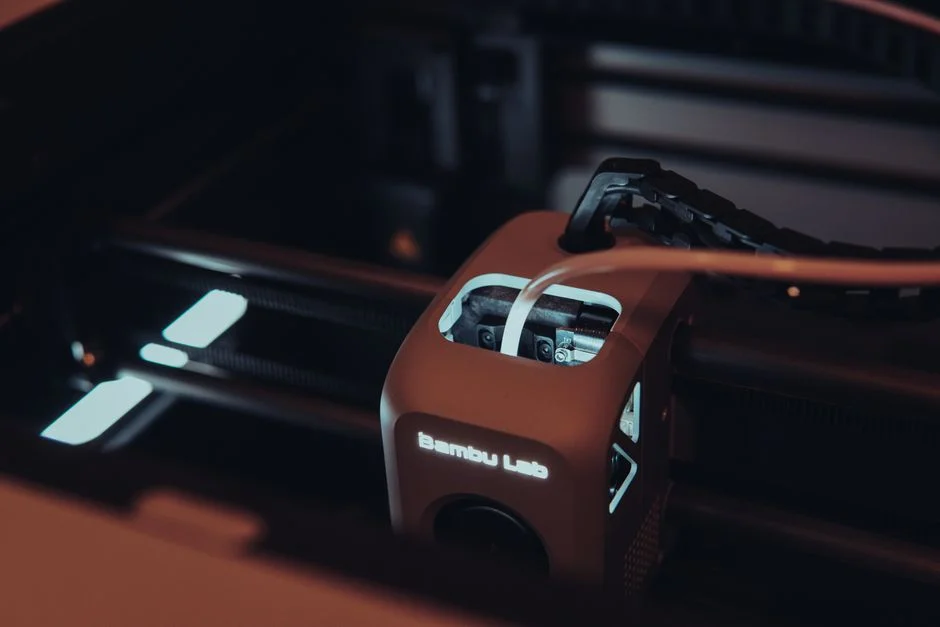
ORIGINAL PRUSA CORE One, Ready-to-use 3D Printer, Assembled and, Removable Print Sheets, 1kg Prusament PLA Spool
- Assembled and tested, ready to use out of box
- Removable print sheets enable easy print removal and bed maintenance
- Entry-level printer typically has smaller build volume than larger models
Creality K2 Combo 3D Printer, Multicolor Printing with CFS, High-Speed 600mm/s, Smart Auto Leveling, Quiet Printing,
- Multicolor printing with CFS system expands design possibilities
- High-speed 600mm/s printing reduces job completion time
- FDM technology produces visible layer lines on prints
Creality K1C 3D Printer, 600mm/s Fast Speed Auto Leveling 3D Printers with AI Camera for 300°C Printing, Switchable
- 600mm/s fast printing speed reduces production time significantly
- Auto leveling simplifies bed preparation and setup process
- High-speed printing may compromise surface finish quality
ORIGINAL PRUSA MK4S High-Speed 3D Printer – Fully Assembled & Tested Desktop FDM Printer with Input Shaping,
- Input Shaping technology enables faster printing speeds than standard models
- Fully assembled and tested reduces setup time for new users
- Desktop FDM printers generally have smaller build volumes than industrial alternatives
FLASHFORGE AD5X Multi-Color 3D Printer, CoreXY 600mm/s High-Speed, 1-Click Auto Leveling, 300°C Direct Drive Extruder,
- CoreXY mechanism enables fast 600mm/s printing speeds
- Multi-color capability expands design possibilities without pausing
- Multi-color printing requires more complex maintenance and nozzle management
Where to Buy
ORIGINAL PRUSA CORE One, Ready-to-use 3D Printer, Assembled and, Removable Print Sheets, 1kg Prusament PLA SpoolSee ORIGINAL PRUSA CORE One, Ready-to-use… on Amazon