Best Creality 3D Printers Reviewed: Top 4 Models Compared
Affiliate disclosure: Some links on this page are affiliate links. If you buy through them we earn a small commission at no extra cost to you. Recommendations are research-driven; we don't claim personal use of every product reviewed. Product prices and availability are accurate as of the date published and are subject to change. Always check Amazon for current pricing before purchasing. Learn more.
Quick Picks
Creality K2 Combo 3D Printer, Multicolor Printing with CFS, High-Speed 600mm/s, Smart Auto Leveling, Quiet Printing,
Multicolor printing with CFS system expands design possibilities
Buy on AmazonCreality K1C 3D Printer, 600mm/s High-Speed Auto Leveling Clog-Free Robust Direct Extruder K1 SE Upgraded 3D Printer
600mm/s high-speed printing reduces production time significantly
Buy on AmazonCreality Ender 3 V3 SE 3D Printer, 250mm/s Faster Print Speed CR Touch Auto Leveling Sprite Direct Extruder Dual Z-Axis
250mm/s print speed enables faster production compared to standard FDM printers
Buy on Amazon| Product | Price Range | Top Strength | Key Weakness | Buy |
|---|---|---|---|---|
| Creality K2 Combo 3D Printer, Multicolor Printing with CFS, High-Speed 600mm/s, Smart Auto Leveling, Quiet Printing, best overall | $$ | Multicolor printing with CFS system expands design possibilities | FDM technology produces visible layer lines on prints | Buy on Amazon |
| Creality K1C 3D Printer, 600mm/s High-Speed Auto Leveling Clog-Free Robust Direct Extruder K1 SE Upgraded 3D Printer also consider | $$ | 600mm/s high-speed printing reduces production time significantly | High-speed printers typically sacrifice print quality for speed | Buy on Amazon |
| Creality Ender 3 V3 SE 3D Printer, 250mm/s Faster Print Speed CR Touch Auto Leveling Sprite Direct Extruder Dual Z-Axis also consider | $$ | 250mm/s print speed enables faster production compared to standard FDM printers | Entry-level FDM printer may have smaller build volume than larger models | Buy on Amazon |
| Creality K2 Plus Combo 3D Printer, Multi Color Printing with New CFS, Max 600mm/s Printing Speed, Full-auto Leveling, also consider | $$ | Multi-color printing capability expands design possibilities | FDM technology produces visible layer lines on prints | Buy on Amazon |
Picking a Creality printer is straightforward in theory, the brand dominates the consumer FDM market, the lineup is well-documented, and community data is deep. The harder question is which model fits the build volume, speed, and filament complexity you actually need. Spec sheets tell most of the story, and owner threads on r/3Dprinting fill in the rest.
These four picks cover the current Creality range worth serious attention, from a proven entry-level workhorse to a high-speed multicolor system. For context on how these fit within the broader FDM Printers category, that hub covers the full competitive landscape.
Top Picks
Creality K2 Plus Combo 3D Printer
The Creality K2 Plus Combo is Creality’s most capable multicolor machine in the current lineup. It pairs the CFS (Color Filament System) with a 600mm/s maximum print speed, a combination that positions it firmly in the high-output tier of desktop FDM. Spec sheets show a generous build volume, and the full-auto leveling implementation here is more refined than on earlier Creality hardware, with owner reports pointing to consistent first-layer adhesion without repeated manual intervention.
For print jobs requiring four or more filament colors, the CFS pipeline handles spool management in a way that reduces the mid-print failure rate owners commonly report on competing multicolor systems. The trade-off, as with any FDM multicolor setup, is purge waste. Owners on r/3Dprinting indicate that dialing in purge tower volume versus filament loss takes a few sessions to calibrate, but the consensus is that the defaults get you close.
Where this machine earns its place over the standard K2 Combo is build volume. If the projects on your plate are large-format, enclosure panels, cosplay components, architectural models, the expanded bed on the K2 Plus changes the math in its favor. For smaller, faster prints where multicolor is the main draw, the K2 Combo remains the leaner option.
Check current price on Amazon.
Creality K2 Combo 3D Printer
The Creality K2 Combo brings the same CFS multicolor system and 600mm/s speed ceiling as the Plus variant at a more accessible mid-range position. The machine targets the maker who wants to produce multicolor prints regularly but doesn’t need the expanded build envelope of the larger model. Spec-to-spec, the core motion system and extruder hardware are equivalent, the meaningful differences are build volume and footprint.
Community consensus is that the K2 Combo’s auto-leveling implementation is reliable out of the box. First-layer calibration, which remains the most common friction point for new FDM owners, is handled automatically with enough accuracy that owner threads rarely surface repeat leveling failures as a complaint.
The honest trade-off to name here is maintenance cadence. Multi-material printing with the CFS involves more mechanical contact points than single-filament operation, more contact points mean more surfaces that need periodic inspection. Owner reports describe maintenance intervals as manageable, not burdensome, but this is a machine that rewards a methodical operator. For buyers committed to multicolor output at volume, the case for the K2 Combo over a single-filament machine is strong.
Check current price on Amazon.
Creality K1C 3D Printer
The Creality K1C is the speed-focused single-filament option in this group, 600mm/s maximum, direct drive extruder, auto leveling, and a clog-resistant hotend design that Creality specifically engineered for carbon-fiber-reinforced filaments. That last detail matters. Most direct drive setups at this speed tier are tuned for PLA and PETG. The K1C’s hardened components and hotend geometry extend reliable operation to CF-PLA and CF-PETG without swapping hardware.
Owner reports consistently flag two things: the speed is real at the rated ceiling, and print quality at moderate speeds, in the 200-350mm/s range, is solid. Running a 600mm/s profile continuously on detail-critical parts is a trade-off most owners choose not to make. The machine is fast when you want fast; the question is how often that ceiling actually serves the print.
For a buyer whose primary filament is PLA or PETG and who doesn’t need multicolor output, the K1C is a focused tool. The direct extruder eliminates the flex-path clogging that plagues Bowden setups with abrasive materials. That alone narrows the failure modes considerably compared to prior-generation Creality hardware at this speed class.
Check current price on Amazon.
Creality Ender 3 V3 SE
The Creality Ender 3 V3 SE is the entry point of this group, and it earns that role honestly. At 250mm/s rated speed, it’s slower than the K-series machines, but it’s also a simpler mechanical system with a long community support tail, extensive firmware documentation, and parts availability that no other machine in this group can match. For a first FDM printer, the r/3Dprinting community consistently puts the Ender 3 V3 SE near the top of the recommendation list.
The CR Touch auto-leveling and Sprite direct extruder are meaningful upgrades over earlier Ender 3 iterations. Owner reports indicate the CR Touch is more reliable than the capacitive probes on older SE variants, and the direct extruder handles flexible filaments better than the Bowden setups the early Ender 3 models shipped with. The dual Z-axis addition addresses a long-standing critique of single-Z Ender 3 designs, gantry tilt on tall prints is substantially reduced.
Where the Ender 3 V3 SE is not the right answer: a buyer who needs speed, large build volume, or multicolor capability will outgrow it quickly. For a maker focused on learning FDM fundamentals, bed adhesion, slicer settings, first-layer calibration, filament brand comparison, this machine removes enough variables to let those lessons actually land.
Check current price on Amazon.
Buying Guide
Print Speed vs. Print Quality
The 600mm/s figure on the K-series machines is a ceiling, not a daily operating target. Spec sheets and owner experience both support the same conclusion: most FDM parts print well at 150-350mm/s, and the quality delta between moderate and maximum speed is visible on detailed geometry. Faster speeds reduce job time, but they also amplify the consequences of any bed leveling or filament tension issue. The right approach is to match speed to part requirements, reserve the ceiling for draft prints and functional blanks.
Single-Filament vs. Multicolor
Multicolor printing via a system like the CFS adds mechanical complexity, filament waste from purge towers, and longer maintenance intervals. For buyers whose projects genuinely require multiple colors, character models, color-coded functional parts, branded display pieces, the output quality justifies those trade-offs. For buyers printing primarily structural or mechanical parts in a single material, the added complexity of a multicolor system provides no functional benefit and introduces additional failure modes. Honest self-assessment of your actual project mix is the most useful filter here.
Direct Drive vs. Bowden Extruders
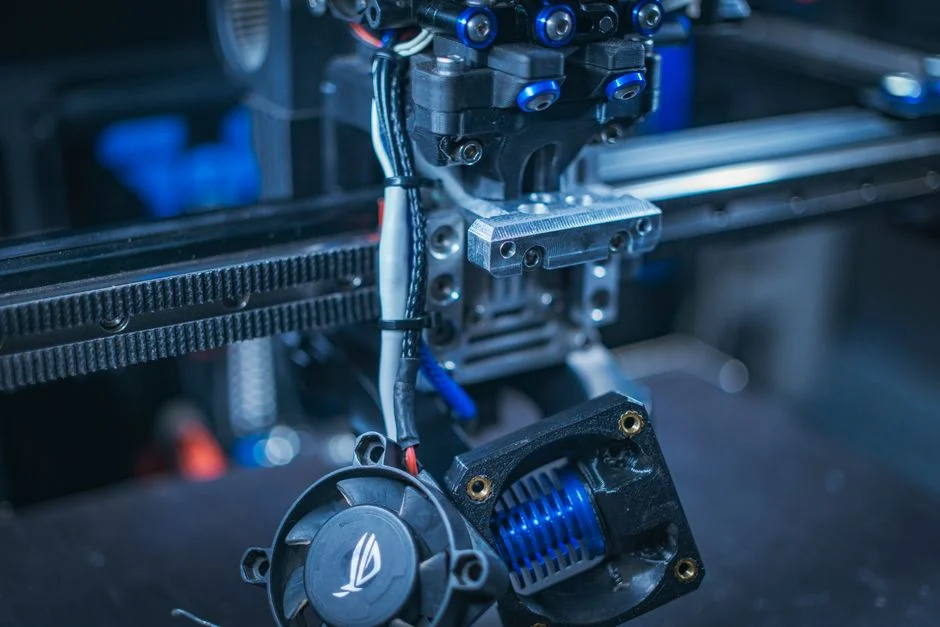
Every machine in this group uses a direct drive extruder, which is the right call for a current-generation mid-range FDM printer. Direct drive eliminates the filament path flex that causes clogging and under-extrusion with flexible and abrasive filaments on Bowden setups. The trade-off is printhead mass, heavier toolheads require more conservative acceleration tuning to avoid ringing artifacts. All four machines here handle this through input shaping firmware, which owner reports confirm reduces ringing to a non-issue at rated speeds.
Slicer Compatibility and Firmware
All four machines in this group are supported by Creality Print and by Orca Slicer, the open-source option the community broadly prefers for its granular control over print parameters. Orca Slicer includes preconfigured profiles for each machine in this lineup, which shortens the initial calibration cycle considerably. Owner reports consistently recommend starting with community-validated Orca profiles rather than Creality Print defaults, particularly for the K1C and K2-series machines where speed profiles benefit from community tuning.
Firmware is a meaningful differentiator in this lineup. The K1C and K2-series machines run Klipper-based firmware, which allows end-user configuration via browser interface without reflashing. That openness matters in practice: Klipper’s input shaping and pressure advance parameters are directly accessible, and community-developed calibration scripts are widely available for each model. For buyers who want to tune beyond factory defaults — resonance compensation, flow rate, retraction calibration — the firmware architecture supports that work without third-party hardware. The Ender 3 V3 SE ships with Creality’s proprietary firmware, with community Klipper ports available for buyers who want that level of control on the entry-level machine. For most owners, the stock firmware is sufficient; the Klipper path is there for those who want to push further without upgrading hardware.
Build Volume and Project Fit
The build volumes in this group range from the Ender 3 V3 SE’s more compact envelope to the expanded bed of the K2 Plus Combo. Before selecting a machine, measure the largest part you realistically expect to print, not the largest part you can imagine printing. Community data on r/3Dprinting consistently shows that most makers overestimate needed build volume and underestimate the value of a reliable, well-supported machine at a manageable size. For a deeper look at how build volume factors into machine selection across the FDM category, the FDM Printers hub covers this in detail.
Maintenance and Long-Term Ownership
FDM printers require periodic maintenance regardless of brand or price tier. Nozzle wear, bed surface replacement, and belt tension checks are the baseline. Multicolor machines add filament path inspection and CFS mechanism checks to that list. Owner reports across r/3Dprinting suggest that Creality’s parts availability and documentation quality make maintenance straightforward, replacement nozzles, build plates, and extruder components are widely stocked and well-documented. Budgeting for consumables, nozzles and bed surfaces specifically, from the start avoids the common mistake of attributing degraded print quality to machine failure when the actual cause is a worn nozzle.

Frequently Asked Questions
Which Creality printer is best for a first-time FDM user?
The Ender 3 V3 SE is the strongest starting point for most first-time FDM owners. The community support tail is longer than any other machine in this group, the documentation is thorough, and the simplified mechanical design reduces the number of variables a new user has to manage simultaneously. Owner consensus on r/3Dprinting is consistent on this recommendation across several years of posts.
What is the difference between the K2 Combo and the K2 Plus Combo?
The primary difference is build volume. The K2 Plus Combo offers a larger print bed, which matters for large-format projects like cosplay components, enclosure panels, or architectural models. The core hardware, CFS multicolor system, 600mm/s speed ceiling, full-auto leveling, is equivalent between the two machines. Buyers whose projects fit within the standard K2 Combo envelope will not benefit meaningfully from the Plus variant.
Is the 600mm/s speed on the K1C and K2 models usable in practice?
The 600mm/s ceiling is real, but most owners operate at 150-350mm/s for quality-critical parts. At maximum speed, layer adhesion and surface finish trade off against time savings. For draft prints, prototypes, and functional blanks where surface quality is secondary, the ceiling is genuinely useful. Owner reports confirm that the K1C and K2-series machines handle the rated speed without mechanical instability, the ceiling is a print-quality decision, not a reliability concern.
Does the Creality K1C handle abrasive filaments like carbon fiber reliably?
The K1C is specifically engineered for abrasive filaments. Its hardened hotend components and direct drive extruder handle CF-PLA and CF-PETG without the nozzle wear that standard brass nozzles suffer on other machines. Owner reports describe reliable operation with carbon-fiber-reinforced materials over extended use. Standard PLA and PETG run without issue as well, the hardened hardware is durable with standard filaments and does not require any special handling for non-abrasive materials.
How much maintenance does a multicolor Creality printer require compared to a single-filament machine?
Multicolor machines like the K2 Combo and K2 Plus Combo have more contact points in the filament path, the CFS mechanism, additional feed paths, and purge systems all require periodic inspection. Owner reports describe the additional maintenance as manageable, typically adding one inspection step per session compared to single-filament operation. The meaningful commitment is consistency: multicolor machines reward operators who check filament tension and path integrity regularly, rather than running them to failure.

Creality K2 Combo 3D Printer, Multicolor Printing with CFS, High-Speed 600mm/s, Smart Auto Leveling, Quiet Printing,
- Multicolor printing with CFS system expands design possibilities
- High-speed 600mm/s printing reduces job completion time
- FDM technology produces visible layer lines on prints
Creality K1C 3D Printer, 600mm/s High-Speed Auto Leveling Clog-Free Robust Direct Extruder K1 SE Upgraded 3D Printer
- 600mm/s high-speed printing reduces production time significantly
- Auto leveling feature simplifies initial setup and calibration
- High-speed printers typically sacrifice print quality for speed
Creality Ender 3 V3 SE 3D Printer, 250mm/s Faster Print Speed CR Touch Auto Leveling Sprite Direct Extruder Dual Z-Axis
- 250mm/s print speed enables faster production compared to standard FDM printers
- CR Touch auto-leveling reduces manual bed leveling setup time and complexity
- Entry-level FDM printer may have smaller build volume than larger models
Creality K2 Plus Combo 3D Printer, Multi Color Printing with New CFS, Max 600mm/s Printing Speed, Full-auto Leveling,
- Multi-color printing capability expands design possibilities
- 600mm/s maximum speed enables faster print completion
- FDM technology produces visible layer lines on prints
Where to Buy
Creality K2 Combo 3D Printer, Multicolor Printing with CFS, High-Speed 600mm/s, Smart Auto Leveling, Quiet Printing,See Creality K2 Combo 3D Printer, Multico… on Amazon