Best Nylon Filament for FDM Printers: Top Picks Reviewed
Affiliate disclosure: Some links on this page are affiliate links. If you buy through them we earn a small commission at no extra cost to you. Recommendations are research-driven; we don't claim personal use of every product reviewed. Product prices and availability are accurate as of the date published and are subject to change. Always check Amazon for current pricing before purchasing. Learn more.
Quick Picks
OVERTURE Nylon Filament 1.75mm 3D Printer Filament, Polyamide (PA) 1kg Spool (2.2lbs), Dimensional Accuracy +/- 0.02
Nylon material offers flexibility and durability for functional parts
Buy on AmazonSUNLU Easy PA Filament 1.75mm 1KG, Nylon 6+66 3D Printer Filament, Polyamide (PA) Nylon Filament, Strong and Durable,
Nylon 6+66 blend offers strong and durable prints
Buy on AmazonYXPOLYER 3D Printer Filament Nylon Filament PA6 2.2 lbs 1kg White Nylon with Heat-Resistant AMS-Compatible Spool, 3D
PA6 nylon offers heat-resistant properties for demanding applications
Buy on Amazon| Product | Price Range | Top Strength | Key Weakness | Buy |
|---|---|---|---|---|
| OVERTURE Nylon Filament 1.75mm 3D Printer Filament, Polyamide (PA) 1kg Spool (2.2lbs), Dimensional Accuracy +/- 0.02 best overall | $$ | Nylon material offers flexibility and durability for functional parts | Nylon requires higher temperatures than standard PLA or ABS | Buy on Amazon |
| SUNLU Easy PA Filament 1.75mm 1KG, Nylon 6+66 3D Printer Filament, Polyamide (PA) Nylon Filament, Strong and Durable, also consider | $$ | Nylon 6+66 blend offers strong and durable prints | Polyamide filaments typically require heated bed and chamber | Buy on Amazon |
| YXPOLYER 3D Printer Filament Nylon Filament PA6 2.2 lbs 1kg White Nylon with Heat-Resistant AMS-Compatible Spool, 3D also consider | $$ | PA6 nylon offers heat-resistant properties for demanding applications | Nylon filament requires heated bed and controlled environment | Buy on Amazon |
| Polymaker Fiberon PA612-CF15 Carbon Fiber Nylon Filament 1.75mm Black 0.5kg, Fiberon PA612-CF15 Strong & Low Moisture also consider | $$ | Carbon fiber reinforcement provides strong, rigid prints | Carbon fiber nylon typically requires heated bed and enclosure | Buy on Amazon |
| Polymaker Fiberon PA6-GF Glass Fiber Nylon Filament 1.75mm Grey 0.5kg, Fiberon PA6-GF Nylon Warp Free 1.75mm 3D also consider | $$ | Glass fiber reinforcement increases strength and rigidity versus standard nylon | Glass fiber nylon requires higher temperatures, limiting printer compatibility | Buy on Amazon |
| SUNLU Easy PA Filament 1.75mm 1KG, Nylon 6+66 3D Printer Filament, Polyamide (PA) Nylon Filament, Strong and Durable, also consider | $$ | Nylon 6+66 blend offers strong and durable printed parts | Nylon filaments typically require heated bed and controlled cooling | Buy on Amazon |
Nylon filament sits in an uncomfortable middle ground for a lot of FDM printers, too demanding for stock setups, too useful to ignore. It runs hotter than PLA, absorbs moisture faster than almost any other common filament, and rewards the printers that can actually manage it with parts that flex, resist impact, and survive heat that would wreck a PLA print in minutes.
These six picks cover the main decision points in the nylon category: unfilled PA for general functional parts, a nylon blend formulated to ease printing, and two reinforced options from Polymaker for when stiffness and structural performance are the priority. A full breakdown of the decision variables is in the Filament hub if you’re still working through material selection.

Top Picks
OVERTURE Nylon Filament 1.75mm
OVERTURE Nylon Filament 1.75mm is a straightforward PA option that fits the profile of a first nylon print for makers who’ve already nailed their machine’s temperature and moisture management. Spec sheets show dimensional accuracy held to +/- 0.02mm across the spool, that’s tight enough for functional hardware like brackets, hinges, and snap-fit clips where tolerance actually matters.
The 1kg spool is a reasonable starting volume. Nylon dries down noticeably before you even start a print, so having material to spare isn’t a luxury. Owner reports consistently point to warping as the main variable to manage: a heated bed in the 70-90°C range and an enclosure or draft shield are the standard mitigations, not optional steps.
OVERTURE doesn’t carry the same name recognition in the nylon category as Polymaker, but the spec accuracy figures check out against community reports. For prototyping parts that need durability and flex without moving into reinforced territory, the case for this spool is solid.
Check current price on Amazon.
SUNLU Easy PA Filament 1.75mm (Black)
The pitch for SUNLU Easy PA Filament is right there in the name, the Nylon 6+66 blend is formulated to lower the bar on printability compared to straight PA6 or PA12. Owner reports on r/3Dprinting generally back that up: bed adhesion is more forgiving, and the warp behavior is less aggressive than unfilled PA6 at equivalent temperatures.
Nylon 6 contributes tensile strength and chemical resistance. Nylon 66 pushes the heat deflection temperature higher and tightens up moisture sensitivity slightly. The blend lands at a useful middle point: easier to print than pure PA6, stronger and more heat-tolerant than most flexible filaments, and compatible with 1.75mm all-metal hotends without exotic hardware.
Drying protocol is still non-negotiable. SUNLU’s published guidance and community consensus both point to 70-80°C for four to six hours before the first print. Skipping that step is the single most common reason for stringing, bubbling, and layer delamination with any nylon, this blend included.
Check current price on Amazon.
YXPOLYER Nylon Filament PA6
YXPOLYER Nylon Filament PA6 is an AMS-compatible spool designed to drop into multi-material setups without the geometry conflicts that cause jams in pallet-based systems. For Bambu Lab users running AMS or a compatible solution, that matters more than most spec comparisons, a spool that won’t seat correctly makes every other specification irrelevant.
Spec sheets describe standard PA6 characteristics: good tensile strength, moderate flexibility, heat resistance above what PLA or PETG can manage. Owners printing structural brackets, tooling jigs, and parts that see cyclic load report the material holds up as expected for unfilled nylon in that application range.
The brand is newer and doesn’t carry the track record that Polymaker or even SUNLU has in the nylon segment. Community data points on r/3Dprinting are limited. For buyers running AMS who want a nylon option that physically fits the system, it’s a reasonable choice, but the case for YXPOLYER over established brands rests almost entirely on that AMS compatibility feature.
Check current price on Amazon.
Polymaker Fiberon PA612-CF15 Carbon Fiber Nylon
Reinforced nylon is a different category from unfilled PA. Polymaker Fiberon PA612-CF15 puts 15% chopped carbon fiber into a PA612 matrix, a nylon variant already known for lower moisture absorption than PA6 or PA66. The result is a filament that produces parts with notably higher stiffness and significantly lower weight than you’d get from aluminum-filled PLA or even unfilled engineering thermoplastics.
PA612 specifically absorbs less moisture than PA6, which simplifies long-term storage and reduces the sensitivity window between drying and printing. Community benchmark data for carbon fiber nylon consistently shows this class of material producing parts with tensile strength figures well above standard PLA or PETG. Wear resistance on the nozzle side is the real constraint: hardened steel at 0.4mm or larger is required. Brass nozzles won’t survive this.
The 0.5kg spool is the right size for a first run with any engineering filament, it’s enough to validate settings, dial in retraction, and produce the parts you actually need without committing to a full kilogram of material that may sit on the shelf. Polymaker’s documentation and active community support make troubleshooting accessible for a reinforced material.
Check current price on Amazon.
Polymaker Fiberon PA6-GF Glass Fiber Nylon
Where carbon fiber reinforcement produces rigid, high-stiffness parts, Polymaker Fiberon PA6-GF takes a different approach. Glass fiber increases rigidity and dimensional stability compared to unfilled nylon, but the fiber orientation and glass particle geometry result in parts that are less brittle than carbon-fiber equivalents under impact load. For parts that see vibration, repeated flexion, or impact rather than static structural load, that trade-off is worth understanding before choosing between the two.
Polymaker’s warp-resistant formulation is a meaningful differentiator here. Standard PA6 at nozzle temperatures above 240°C on large flat parts is genuinely difficult, warping pulls corners up even with a heated bed and enclosure. Owner reports on Polymaker’s glass-fiber line consistently describe better bed adhesion retention and less corner lift than unfilled PA6, which is the primary practical advantage of the formulation.
The 0.5kg spool and the 1.75mm diameter cover most desktop FDM configurations. Hardened steel nozzle required, glass fiber abrades brass on the same timeline as carbon fiber. Nozzle wear is a real operational cost with this class of filament and should factor into total material cost assessment.
Check current price on Amazon.
SUNLU Easy PA Filament 1.75mm (Natural/White)
This is the same Nylon 6+66 formulation as SUNLU’s black Easy PA variant, the differentiation is colorway, not chemistry. SUNLU Easy PA in natural/white is the practical choice for any application where visibility into part geometry matters: thin wall inspection, fitting verification, or parts that will be painted or dyed post-print.
Natural nylon also gives a clearer read on print quality issues during the run. Layer delamination, bubbling from residual moisture, and stringing show up more visibly in a light-colored filament than in black, useful diagnostic signal for anyone still dialing in nylon print settings. Owner reports on print behavior align with the black variant: manageable warping, consistent adhesion on PEI or garolite, and a printability profile meaningfully easier than straight PA6.
Functionally, there’s no meaningful performance delta between this and the black variant. The choice between them is downstream of application: if color doesn’t constrain the decision, natural is the better diagnostic tool while settings are being refined.
Check current price on Amazon.
Buying Guide
Nylon Variant Selection: PA6, PA612, and Blends
The nylon category isn’t one material, it’s a family with meaningfully different properties across variants. PA6 is the most common and most affordable: good tensile strength, useful flexibility, but the highest moisture absorption of the common nylon types and the most aggressive warp behavior at temperature. PA612 absorbs less moisture, handles storage gaps between drying and printing better, and warps less, at a higher cost per kilogram. Nylon 6+66 blends aim at a middle point: easier to print than pure PA6, stronger than flexible filaments, useful for general functional parts. Variant selection should start with the application’s heat, moisture, and structural requirements, not price alone.
Reinforced vs. Unfilled Nylon
Carbon fiber and glass fiber reinforced nylons are not substitutes for unfilled PA, they’re a different class of material suited to a narrower set of applications. Carbon fiber reinforcement (like Polymaker’s CF15) produces stiff, lightweight parts with excellent static load performance but lower impact toughness than unfilled nylon. Glass fiber reinforcement increases rigidity and dimensional stability with better impact resistance than CF at equivalent stiffness levels. Unfilled nylon is the right choice where flex, impact absorption, or living hinge geometry is required. Reinforced options are right for brackets, structural components, and parts that need to hold shape under load and temperature.
Printer Requirements for Nylon
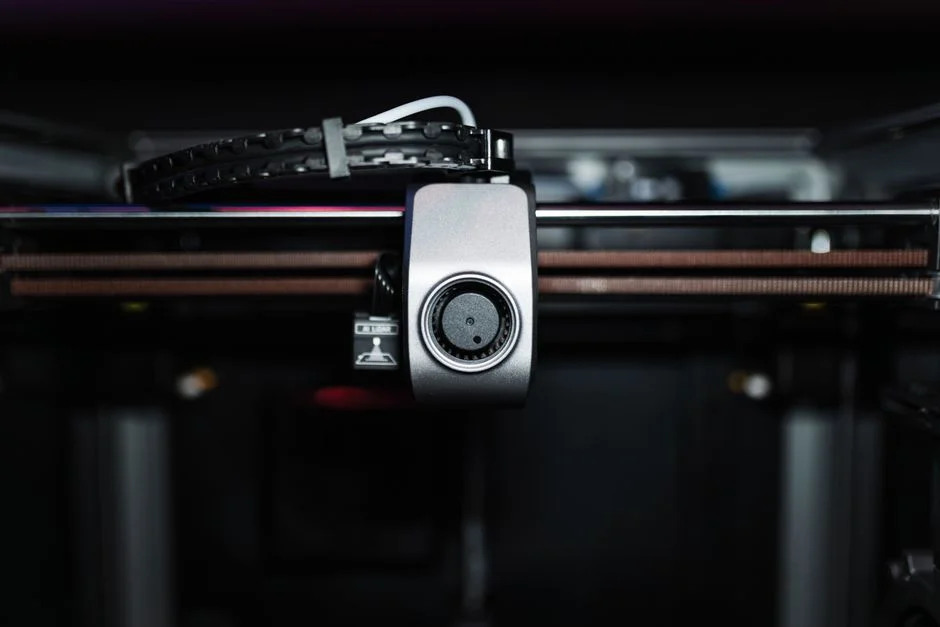
Not all FDM setups can run nylon reliably. The minimum practical configuration is a hotend capable of sustained 240-260°C, all-metal construction, no PTFE in the melt zone. A heated bed at 70-90°C is required to manage warp on most nylon variants; PEI or garolite surfaces outperform glass for adhesion. An enclosure is strongly recommended for standard PA6 and reinforced variants, ambient temperature swings mid-print cause delamination and corner lift. Reinforced nylons additionally require a hardened steel nozzle at 0.4mm or larger. Running carbon fiber or glass fiber nylon through brass will visibly wear the nozzle within a few hundred grams. The full breakdown of printer requirements by filament type is covered in the filament selection guide.
Moisture Management Before and During Printing
Nylon is hygroscopic, it absorbs moisture from ambient air continuously, not just during storage. A spool left out overnight in a humid environment will print differently than one dried immediately before use. Community consensus on r/3Dprinting puts practical drying protocol at 70-80°C in a food dehydrator or filament dryer for four to six hours before printing. Printing from a sealed dry box with desiccant during the run extends that window on humid days. Bubbling during extrusion, excessive stringing, and inter-layer delamination are the diagnostic signals for moisture-compromised nylon, if any of those appear, drying the spool before continuing is the first corrective step. Our filament dryer roundup covers which units actually reach the 70-80°C ceiling nylon needs.
Spool Size and Testing Strategy
Nylon has a steeper setup curve than PLA or PETG. Print settings, bed temperature, enclosure management, drying protocol, retraction, all interact, and dialing them in costs material. Starting with a 0.5kg spool for any new nylon variant, especially reinforced options, is the lower-risk approach. It’s enough material to validate settings and produce useful parts without committing a full kilogram to a material that may not suit the application. Once a variant is validated on a specific printer configuration, moving to 1kg spools is straightforward. The 0.5kg options from Polymaker’s Fiberon line exist specifically for this evaluation workflow.
Frequently Asked Questions
Is nylon filament harder to print than PLA?
Nylon requires more printer capability than PLA, higher hotend temperatures, a heated bed, and ideally an enclosure. The moisture sensitivity is the part most newcomers underestimate: nylon left on a desk overnight can print noticeably worse than a freshly dried spool. With proper drying protocol and a capable printer setup, nylon is manageable, but it has a steeper setup curve than any standard filament.
Do I need an enclosure to print nylon?
An enclosure is strongly recommended for standard PA6 and reinforced nylon variants. Without one, ambient air temperature swings mid-print cause layer delamination and corner warping on larger parts. Smaller prints with a well-tuned bed temperature and a draft shield workaround can sometimes get through without a full enclosure, but community reports consistently show that enclosures meaningfully improve success rates on nylon.
What’s the difference between the SUNLU Easy PA and the OVERTURE nylon?
The SUNLU Easy PA uses a Nylon 6+66 blend formulated for lower warp and easier bed adhesion compared to straight PA6. The OVERTURE Nylon Filament is unfilled PA with a tight dimensional accuracy spec. For a first nylon print with a printer that’s borderline on enclosure capability, the SUNLU blend’s more forgiving warp behavior is the practical advantage. For applications where dimensional accuracy is the priority, the OVERTURE’s +/- 0.02mm spec is the relevant figure.
Can I print Polymaker’s carbon fiber nylon on a standard 0.4mm brass nozzle?
No. Carbon fiber and glass fiber filled nylons abrade brass nozzles rapidly, within a few hundred grams of material in some cases. Hardened steel at 0.4mm minimum is required. Ruby-tipped and other wear-resistant nozzle types also work.
Which nylon filament is best for functional parts that see heat and load?
PA612-based materials like the Polymaker Fiberon PA612-CF15 are the strongest choice for combined heat and structural load, the PA612 matrix has higher heat deflection than PA6, and the carbon fiber reinforcement adds stiffness. For parts that need some flex under load rather than rigid stiffness, unfilled nylon variants like the SUNLU Easy PA or OVERTURE are the more appropriate choice. The application’s load type, static versus cyclic, rigid versus impact-absorbing, is the deciding variable.

OVERTURE Nylon Filament 1.75mm 3D Printer Filament, Polyamide (PA) 1kg Spool (2.2lbs), Dimensional Accuracy +/- 0.02
- Nylon material offers flexibility and durability for functional parts
- Tight dimensional accuracy of +/- 0.02mm ensures precise prints
- Nylon requires higher temperatures than standard PLA or ABS
SUNLU Easy PA Filament 1.75mm 1KG, Nylon 6+66 3D Printer Filament, Polyamide (PA) Nylon Filament, Strong and Durable,
- Nylon 6+66 blend offers strong and durable prints
- 1.75mm diameter compatible with most standard 3D printers
- Polyamide filaments typically require heated bed and chamber
YXPOLYER 3D Printer Filament Nylon Filament PA6 2.2 lbs 1kg White Nylon with Heat-Resistant AMS-Compatible Spool, 3D
- PA6 nylon offers heat-resistant properties for demanding applications
- One kilogram spool provides substantial material for projects
- Nylon filament requires heated bed and controlled environment
Polymaker Fiberon PA612-CF15 Carbon Fiber Nylon Filament 1.75mm Black 0.5kg, Fiberon PA612-CF15 Strong & Low Moisture
- Carbon fiber reinforcement provides strong, rigid prints
- PA612 nylon offers low moisture absorption properties
- Carbon fiber nylon typically requires heated bed and enclosure
Polymaker Fiberon PA6-GF Glass Fiber Nylon Filament 1.75mm Grey 0.5kg, Fiberon PA6-GF Nylon Warp Free 1.75mm 3D
- Glass fiber reinforcement increases strength and rigidity versus standard nylon
- 0.5kg spool size good for testing materials before larger purchases
- Glass fiber nylon requires higher temperatures, limiting printer compatibility
SUNLU Easy PA Filament 1.75mm 1KG, Nylon 6+66 3D Printer Filament, Polyamide (PA) Nylon Filament, Strong and Durable,
- Nylon 6+66 blend offers strong and durable printed parts
- 1.75mm standard diameter compatible with most 3D printers
- Nylon filaments typically require heated bed and controlled cooling
Where to Buy
OVERTURE Nylon Filament 1.75mm 3D Printer Filament, Polyamide (PA) 1kg Spool (2.2lbs), Dimensional Accuracy +/- 0.02See OVERTURE Nylon Filament 1.75mm 3D Pri… on Amazon